Pier and Beam Leveling in New Braunfels
Pier and beam leveling in New Braunfels for bouncy floors, sagging beams, and crawl space settling caused by shifting clay soils.
When a Pier and Beam Floor Starts to Move
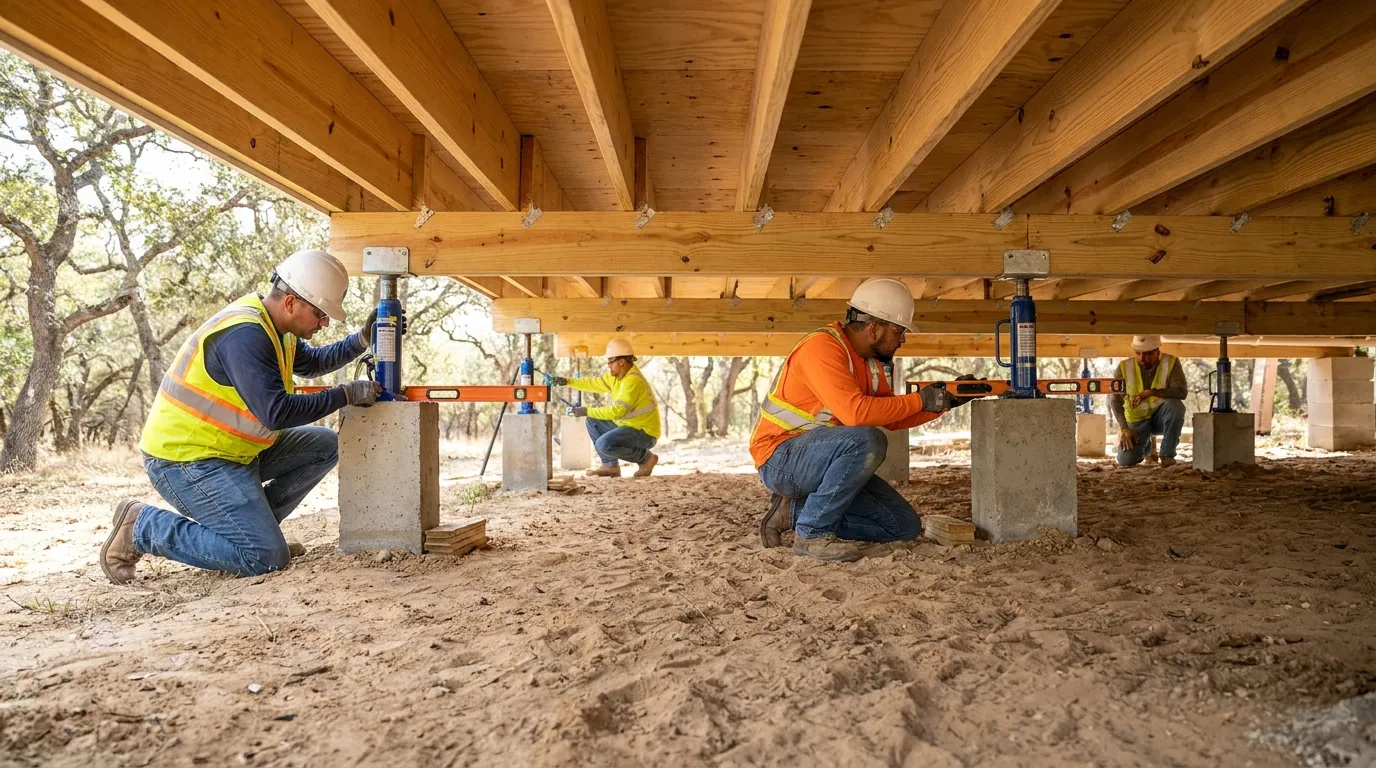
Pier and beam construction lifts the house off the ground on piers with wood beams and joists spanning between them. It is common in older New Braunfels homes and has one real advantage over slab: it can be re-leveled. When floors start to bounce, dip toward the center of a room, or slope toward one corner, the supports underneath have usually shifted or the wood has begun to sag between them.
The warning signs are easy to feel underfoot. Floors that feel springy, gaps opening between the floor and baseboard, interior doors dragging, and a noticeable slope when you set a ball on the floor all point to a support system that has lost its level. Underneath, you may find piers that have settled into the clay, shims that have fallen out, or beams that have crowned or rotted where moisture collected.
Because the clay soils here swell and shrink so aggressively, piers set on or near that active layer rarely stay put. A proper correction re-establishes solid bearing and even support, and it pairs naturally with crawl space support work and a full foundation inspection to map exactly where the floor has moved.
The Leveling Process
Re-leveling a raised-floor home is methodical work done from underneath the structure.
-
Survey the floor
We take elevation readings across every room to find the high and low points and understand the pattern of movement before touching a single support.
-
Inspect the supports
From the crawl space we check each pier, beam, and joist for settling, rot, crushed shims, and moisture damage that undermines the structure.
-
Add or reset supports
We install new supports where spans have sagged and reset or replace piers that have dropped into the clay, giving the frame solid bearing again.
-
Lift in stages
Beams are shimmed and raised gradually to bring the floor back toward level while watching for stress in walls and finishes above.
-
Address moisture
We look at ventilation and standing water under the house, because a damp crawl space rots wood and softens the soil that holds the piers.
Why Local Conditions Matter Under the House
The crawl space is where New Braunfels weather shows up most directly. Sudden storms push water under a raised house, and if it lingers, the soil around the piers turns soft and the wood above it stays damp. Then a dry spell pulls moisture out of the clay and the piers settle again. That cycle is exactly why a floor that was leveled years ago can drift out of level once more if drainage is ignored.
That is why we treat drainage correction and moisture control as part of a lasting fix, and why re-leveling in towns like Seguin and Geronimo follows the same principles even where the terrain differs. Getting the water managed is what keeps the level correction in place.
Frequently asked questions
Can a pier and beam floor be re-leveled?
Yes. That is one of the advantages of pier and beam construction. Because the house sits on adjustable supports, floors can be raised back toward level by resetting piers and shimming beams from the crawl space.
Why does my floor feel bouncy?
Bounce usually means a beam or joist is spanning too far without support, often because a pier settled or a support fell out. Adding support at the sagging span typically firms the floor back up.
Will re-leveling crack my walls?
Lifting is done in careful stages precisely to minimize stress on finishes. Some minor cracking can occur when a floor has been out of level a long time, but a controlled lift keeps it to a minimum.
How often do these homes need re-leveling?
It depends heavily on drainage and soil moisture. A home with good water management and a dry crawl space can hold level for many years, while one with chronic moisture problems may drift again sooner.
Talk to someone about your job
Call to describe the problem and get a quote for work in New Braunfels, TX.