Foundation Inspection in New Braunfels
Foundation inspection in New Braunfels with elevation surveys to measure movement and tell you what your home actually needs before any repair.
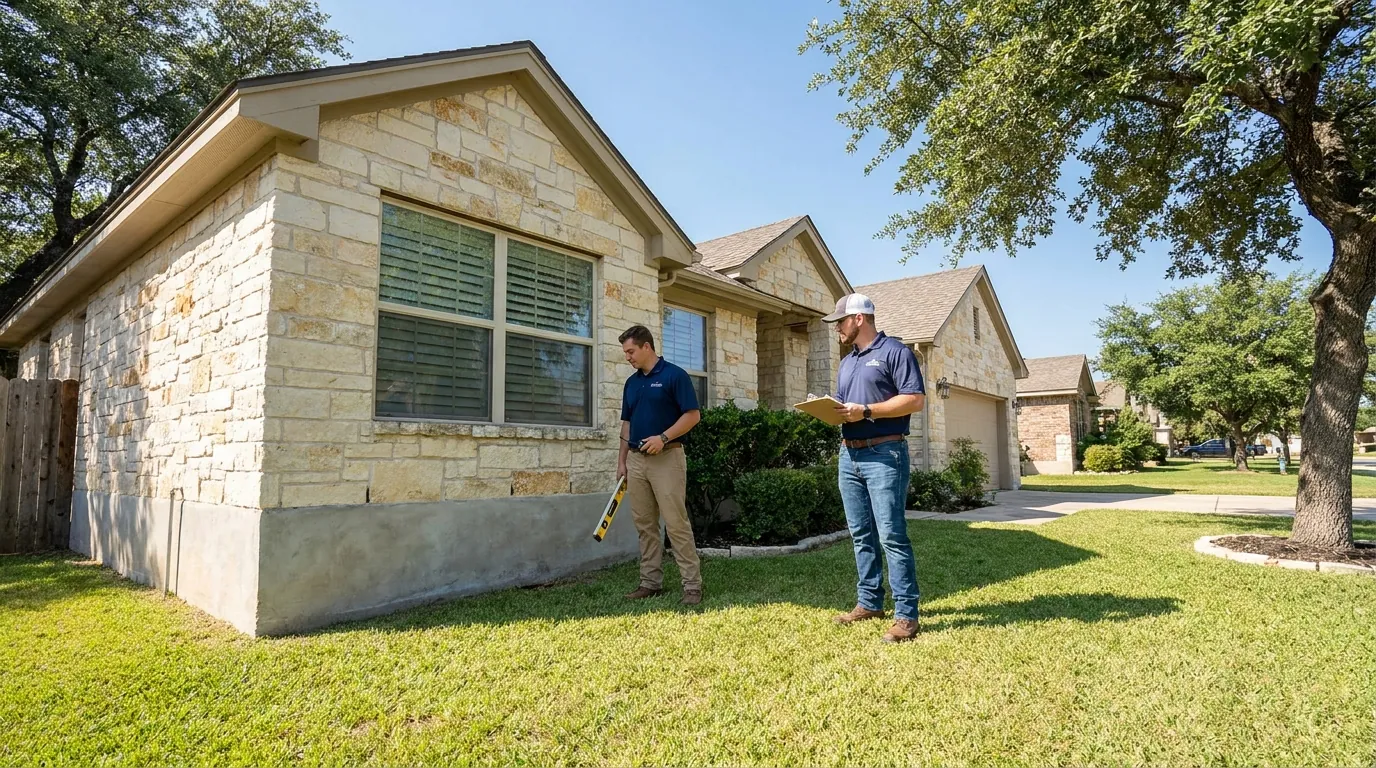
Start by Measuring, Not Guessing
A foundation inspection is where a smart repair decision starts. Cracks and sticking doors tell you something is moving, but they do not tell you how much, where, or whether it is still active. An inspection measures the actual elevations across your floor and looks at the conditions around the house, so any recommendation is based on evidence instead of a glance at the cracks.
Homeowners usually call for an inspection when they notice the classic warning signs — diagonal cracks over doorways, stair-step cracks in exterior brick, floors that feel out of level, gaps at the ceiling or baseboards, or windows that no longer close square. It is also worth doing before buying a home in this area, since expansive clay affects nearly every property differently and a measured survey removes the guesswork.
What the inspection finds points toward the right path: a settling slab may call for slab foundation repair, a raised home may need pier and beam leveling, and many homes simply need better drainage correction before anything else.
What an Inspection Covers
A thorough inspection looks at the structure and the conditions driving its movement.
-
Elevation survey
We take readings across the floor to map the high and low points and measure how much any area has settled or heaved.
-
Interior and exterior review
We document cracks, door and window function, and separations, and check exterior brick and slab edges for the pattern of movement.
-
Drainage and soil check
We look at grading, gutters, standing water, and tree placement to understand what is feeding moisture into or out of the soil around the foundation.
-
Crawl space review
On raised homes we examine piers, beams, and moisture conditions underneath to find failing supports.
-
Plain-language findings
You get a clear explanation of what is moving, what is likely causing it, and what your options are — without pressure to do more than the home needs.
Why Local Knowledge Matters in an Inspection
Reading a foundation in New Braunfels means understanding the clay. A crack found right after a wet spell can look alarming when the soil has swollen, while the same home may sit closer to level in a dry stretch. An inspection that accounts for the wet/dry cycle and the specific drainage around your house gives a truer picture than a one-time snapshot of the cracks.
That local grounding matters just as much for homes in Schertz, Cibolo, and Geronimo, where the same expansive soils behave a little differently depending on terrain and drainage. A measured inspection is the honest first step before spending money on any repair.
Frequently asked questions
What does a foundation inspection include?
It typically includes an elevation survey of the floor, a review of interior and exterior cracks and door function, a look at drainage and soil conditions, and, on raised homes, a crawl space review. The result is a clear picture of what is moving and why.
Do I need an inspection if I only see small cracks?
It is a good idea. Small cracks may be cosmetic or the early sign of active movement, and only a measured survey can tell the difference. Catching movement early usually means a smaller, less costly repair.
Should I inspect a home before buying it?
Yes, especially in this region. Expansive clay affects nearly every property, and a measured inspection tells you whether a home has moved, how much, and whether the issue is active before you commit.
Will an inspection tell me exactly what repair I need?
It gives you the evidence to decide. The findings point clearly toward slab repair, re-leveling, drainage work, or monitoring, so you understand your options rather than being handed a single answer.
Talk to someone about your job
Call to describe the problem and get a quote for work in New Braunfels, TX.